Every historical roofline narrates before a visitor actions via the door. Cornices murmur about craft guilds, dormers frame the skies, and somewhere over it all, a finial holds the last note. When that last note rings true, the whole structure really feels unpreventable, as if the structure can not have actually been developed any other way. When it calls incorrect, also one of the most careful reconstruction begins to feel obscure around the sides. Finials are small in account yet considerable in definition, and personalized job is usually the only way to achieve the sort of accuracy that seasoned preservationists and critical property owners expect.
The language of finials
A finial lives at the end of a line, not unlike punctuation. Apexes, gables, domes, cupolas, and dormer peaks each take their cue from age, area, and builder. Gothic Revival chooses dizzy kinds, punctured and spired, sometimes with crockets that resemble climbing up vegetation. Second Realm and French Diverse job commonly flexes toward spheric accounts and flared skirts, indicated to balance the weight of slate mansards. Queen Anne prefers spirited silhouettes, with transformed newel concepts that reference the lathe work seen on patios and stair parts. Colonial Resurgence often tends toward restraint, crisp containers and spears with symmetrical technique. Even the Arts and Crafts activity, dubious of ornament for ornament's benefit, still embraced low, straightforward finials that complete a ridge with silent integrity.
Period-correct finials are not almost outline. Percentage issues. A finial that is fifteen percent also high can make a ridge appearance spindly. One that is a couple of inches too short will check out like a missing out on cap. Over several years specifying and mounting personalized finials, I've discovered a trusted general rule: gauge the visual area, not just the physical dimension. Sightlines from the ground, the range to the road, tree cover, and the pitch of the roofing modification exactly how an item reviews. A twelve-inch difference on a high spire can go away versus the skies. On a reduced gable, fifty percent that is the difference between sophisticated and apologetic.
Reading the archive and reviewing the roof
The most effective restorations begin with interest. Original plans seldom endure, however pictures, tax records, Sanborn maps, and nearby contemporaries typically do. Before we illustration anything, we stroll the area with a long lens, scanning kindred roofing systems for hints. A finial seldom exists in isolation, it belongs to a pattern vocabulary. If the street lugs a run of 1890s Queen Anne homes, you can anticipate proportionally similar finials, constant metal selections, and shared concepts. Even towns left finger prints, like the two-pointed dart finials prominent partly of Pennsylvania that echoed local climate vane patterns.
We additionally checked out the roofing system itself. Slate roofing professionals in the 1880s cut keystone slates at hips differently than their 1920s followers, and those information affect the base plate you make for a finial. A copper ridge roll modifications how water actions. If that ridge conceals a continual vent, the finial should come down on blocking that avoids puncturing the air vent dental caries. These are not theoretical worries. I've seen a well-meaning installer drive lag bolts via a brand-new ridge vent, after that invest a day backtracking a mystical leakage that just showed up with a north wind. Control with Custom-made Roofing system Vents conserves rework, and a purpose-built finial base can extend vent openings without compromise.
Material facts: copper, zinc, and beyond
Finials sustain weather condition at the most bare part of a structure. That single reality puts product selection at the heart of the conversation. Copper continues to be the default for good factors. It creates a protective oxide, takes solder wonderfully, and can be annealed and helped intricate contours without exhaustion. Unfinished copper progresses through cinnamon, umber, and finally to a silent green over 15 to 30 years depending on your environment and air top quality. Aging is not just aesthetic, it is safety, and a well-detailed copper finial on a slate or clay ceramic tile roofing system will last longer than the following two paint cycles, frequently much more.
Zinc uses a cooler, silvery gray that balances with rock and leaded glass. Its natural patina is quicker, and it pairs handsomely with limestone cornices on Beaux-Arts or Timeless Resurgence job. The trade-off is forming problem on tight distances and a demand for exact thermal activity describing. Lead coated copper bridges the visual void, offering the versatility and solderability of copper with a matte gray surface that resembles old lead without its wellness concerns.
For painted traditions, like specific Georgian and Government interpretations, galvanized steel with a high-build architectural layer can look historically ideal at a reduced cost. If you head that instructions, specify G90 or greater galvanizing and a factory-baked fluoropolymer surface. Field-painting a finial after installation is a false economic situation. Overspray on slate looks like neglect, and brush marks reveal themselves from the pathway when the sunlight is low.
Specialty alloys and woods have their area. I have replaced rotted cypress finials on 19th-century cupolas where the objective was to keep the hardwood practice. We encased the new transformed wood core with hand-soldered copper skirts at water-shedding transitions, after that repainted the subjected wood with a breathable linseed oil system. Purists may argue for complete timber, yet the hybrid maintained the account crisp and the upkeep foreseeable. When doubtful, consider what the original builder would certainly have finished with the devices and understanding we have currently, not as an anachronism yet as a continuation of good craft.
Proportion, profile, and the art of restraint
Most clients show up with a picture. The conversation normally begins with form and ends with scale. To get range right, we mock in three measurements. Cardboard is underrated. On a three-story Victorian, a full-size cardboard silhouette hung on a pole can conserve weeks of remorse. We do this on tranquil early mornings, adjust in two-inch increments, and take photographs from the road, the side lawn, and the much edge. The eye lies when you stand too near to a tall roofing, and a camera at 5 feet 6 inches off grade levels most residents will live with.
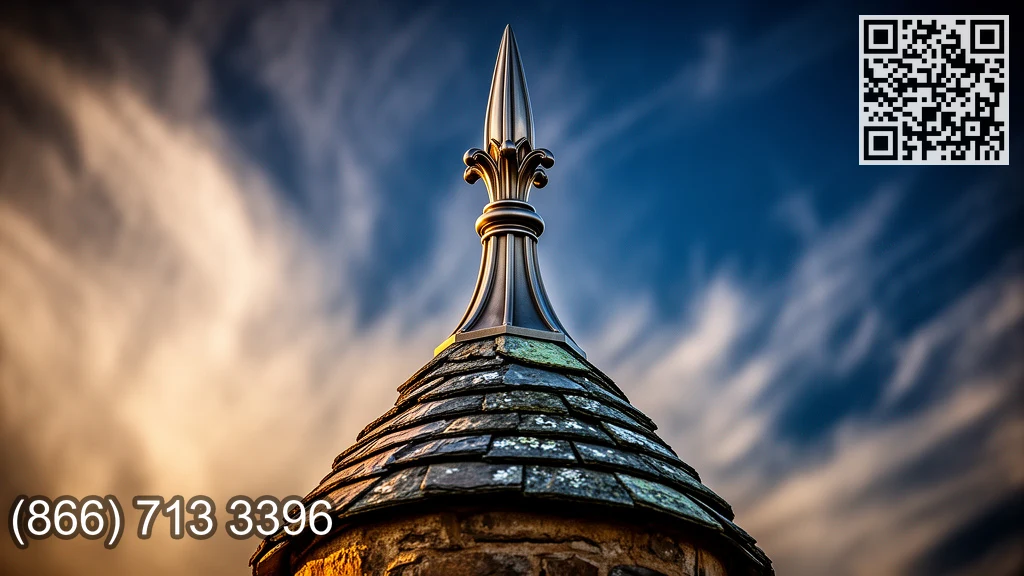
Profiles that consist of bulbs, spires, darts, and fleur-de-lis call for more than a pretty contour. Mechanical strength conceals beneath appeal. A slim apex may need a thicker core or hidden pole to withstand wind. Skirts have to drop water without creating capillary catches where ice can pry solder joints apart. Throughout the years, I have found out to soften shifts at half-rounds and to stay clear of knife-edges. They festinate theoretically, after that chatter under a tinsmith's stake, and lastly catch winter months in an environment that cycles ice up and thaw ten times in a week. The most luxurious detail is one that still looks unpreventable a years later.
Mounting without compromise
A finial's elegance is just as trustworthy as its anchorage. Historic roofings complicate accessories. Slate can not be strolled on casually, clay tiles crack under factor loads, and the majority of contemporary membranes do not like slits. A custom-made base plate is not a deluxe thing, it is the method. We theme the roofing pitch and the ridge size, after that produce a base that distributes lots to structure with minimal penetrations. Stainless-steel bolts, oversized neoprene washers seated in butyl, and a firm counterflashing skirt job as a peaceful group. On jobs with Custom Snow Guards upstream of the finial, we often coordinate spacing so sliding snow never ever loads the finial straight. Thirty pounds per square foot of wet snow moving at the incorrect minute will certainly do what physics dictates.
Cupolas and dormers add their own spins. Customized cupolas typically arrive as building gems that should have a finial scaled to their light's muntin pattern, not the roofing past. I have matched finial bases to concealed steel plates inside a cupola structure, so wind load bypasses delicate sash totally. On Customized Dormers, specifically eyebrow and segmental types, you get little by landing a finial dead center if the dormer's framing does not provide blocking there. A few inches toward a stud bay can be the difference in between a protected installment and a ceiling repair work inside your home after the initial gale.
Patterns, casting, and the craft of replication
Many historical finials were cast in iron, zinc, or structure steels, after that repainted. Others were created from level metal and soldered. When duplicating a details historic item, we begin with determined drawings and, when possible, a physical mold and mildew. Silicone molding of a making it through ornament permits precise pattern production. The factory then pours in an alloy specified for exterior duty, which we later on sheath or cap where water would certainly otherwise sit. Cast components provide crisp information on small themes like acanthus leaves and rosettes, however they also call for thoughtful seclusion from dissimilar steels to stay clear of galvanic corrosion. A thin nylon or EPDM washer is inexpensive insurance.
Sheet-metal finials, the stock-in-trade of firms like Salvo Metal Works and various other boutique, stand out for big forms. Hemmed edges, standing seams on long cones, and sweat-soldered joints allow repair work decades later without taking apart the whole assembly. For enthusiasts who have houses in seaside areas, we take on a belt-and-suspenders strategy: marine-grade sealants at penetrations, more charitable drip sides, and, when appropriate, silicon bronze or 316 stainless poles and bolts. Salt air does not negotiate.
The coating that time deserves
One lure need to be resisted: false patina as a shortcut to gravitas. Chemical salvometalworks.com patination can look good-looking in the first season if done by a skilled finisher that recognizes on-site handling, but it must be straightforward about its intent. Real weathering is unequal. Caps see more sunlight and bleach out. North faces go boring more quickly. If a customer looks for a surface that feels settled on the first day, I suggest a subtler technique. Pre-patinated copper, thoroughly dealt with to stay clear of finger prints, after that allowed to proceed its trip on the roof, reviews as confidence instead of costume.
Paint belongs where history invites it. On a Georgian revival with white-trimmed cornices and a repainted weather condition vane, a painted finial ties the ensemble together. Utilize a system that values expansion and contraction. Primers must bite right into metal chemically, topcoats must remain adaptable, and every edge should be back-primed before assembly. Paint stops working initially at seams and sides where film constructs very finely. A tiny span on sides pays returns you will never ever see however will constantly enjoy.
The quiet role of water
Every decorative decision on a roofing system is a water decision. Finials must prevent creating bowls, racks, or turn around inclines. The base ought to include a kicked flashing that relocates water far from bolts. Soldered joints must be oriented so their laps encounter leeward. Rivets are dependable, yet they make tiny mugs if positioned dealing with uphill. A grain of butyl or a ring of closed-cell foam beneath a washing machine is low-cost poise. One winter, a project with Custom-made Leader Boxes and brand-new half-round seamless gutters exposed a lesson in microclimates. Meltwater refroze along a shadow line, created a little ridge of ice that pressed meltwater towards a finial base, after that under a slate. The repair was not at the finial. We adjusted the adjacent copper snow fence by 2 courses and the problem evaporated. The moral: water locates the path of the very least resistance, not the course you intended.
Integrating finials with the wider composition
Finials do their finest job when the rest of the roof covering ensemble supports them. Personalized Chimney Shrouds with mild crown profiles, Customized Roof covering Vents that borrow the roof's pitch and seam language, and Custom Leader Boxes with proportional faces all contribute to a whole that really feels made up. I once worked with a Romanesque Rebirth rectory where the chimney pots were splendid, tall clay cylinders with rolled lips. The finials on the gable ends looked frail alongside them. We appointed new copper finials that echoed the chimney pot's span in the bulb and duplicated the pot's roll as a hem at the finial skirt. Absolutely nothing transformed structurally, yet the building seemed to pull itself together over night. Architectural precision is frequently regarding repeating concepts at different ranges till the structure hums.
Cupolas should have unique focus. On a Shingle Design home in seaside Maine, the existing cupola had a fussy light weight aluminum climate vane and a slim base. We eliminated it, produced a brand-new wood-and-copper cupola scaled to the ridge depth, after that crowned it with a controlled spear finial in lead layered copper. The new piece pulled the long roofing system together and quieted the horizon. The homeowner later said your home appeared it had ultimately exhaled.
When not to match
Purists sometimes bristle at the pointer that a brand-new finial ought to not resemble the old precisely. There are excellent factors to deviate. Safety and security and codes interfere. Lightning security might need a concealed bonding factor, which transforms an apex's core. Seismic areas ask for even more robust anchorage. Wild animals can compel detail adjustments. A pair of red-tailed hawks transformed a high finial into a perch that produced a mess down the key entrance course. We modified the top account with a refined ball that prevented standing and resolved the trouble without anyone discovering the change.
Budget can be a sincere constraint. Not every job pays of cast duplication or hand-raised accounts. In those situations, a simplified shape with meticulously picked percentages attains dignity without pretense. I suggest clients to spend where the eye remains. If your front gable owns the road, spend there, and suit less noticeable second ridges with easier caps. High-end is not infinite spending, it is intelligent appropriation that leaves none of the building embarrassed.
Measuring success over time
A finial is a 30-year, 60-year, sometimes 100-year choice. You determine success in silence, the absence of callbacks, the method neighbors quit observing the roof covering because it appears like it always belonged. Precautionary treatment is marginal when the style is right. Every now and then, plan a roof covering walk with a lift, not a ladder on slate. Look for loosened set screws on lightning points, hairline splits at soldered joints after serious winters, and the problem of sealer at infiltrations. A five-minute evaluation conserves a Saturday throughout a thunderstorm.
Owners commonly ask when a patina will transform. In a city with web traffic, expect copper to smooth within 2 to 5 years, then opt for a decade before environment-friendly blooms along drip sides. Near salt air, eco-friendlies show up earlier, deep browns hold on indirectly. Under hefty tree cover, aging slows and expands lichen. That can be beautiful or otherwise, depending upon context. For formal homes going for quality, a mild yearly rinse, absolutely nothing aggressive, assists. Do not power clean a finial. You would certainly be surprised the amount of or else cautious people do.
Collaboration and the value of a specialist
Custom Finials bridge techniques: style perceptiveness, metalsmithing, roof covering science, and practical installment. Shops that stay in this junction, like Salvo Metal Works and peers across the nation, bring more than devices. They lug institutional memory. They bear in mind that a 1906 Dutch Colonial in a particular region utilized smaller-diameter apex poles because neighborhood blacksmiths equipped that size. They understand how snow acts on a 9-in-12 slate roof in Vermont and what that suggests for Personalized Snow Guards upstream of the finial. They sketch quickly, yet they prototype patiently. Great partnership saves initiative later.
For designers and professionals, the most effective sequence is simple. Involve the finial producer while you are still sketching roofing system information. Share ridge and hip information, waterproofing methods, and any type of plans for Custom-made Dormers, Custom-made Smokeshaft Shrouds, or Custom-made Roofing system Vents that could influence add-on factors. Agree on a mockup strategy. Choose whether on-site soldering is acceptable or if assembly must be fully shop-complete. Establish crane or lift gain access to early. A finial that can not clear the tree canopy ends up being an awkward dancing on installment day.
A brief field guide to getting it right
The topic stands up to lists, but a small checklist can develop choices without swiping nuance.
- Verify the era, design, and local patterns through photos and neighboring examples before drawing profiles. Mock full range a minimum of once, from real ground sightlines, and change height in small increments. Choose products for both appearances and upkeep truths in your climate, copper when in doubt. Detail the base and blinking as water-management devices initially, ornament second. Coordinate with surrounding roof aspects, specifically snow retention and ridge ventilation, so the finial is celebrated, not sacrificed.
Stories from the scaffold
A few minutes linger that clarify better than theory why personalized matters. Years earlier, we restored a turret on a brick Queen Anne with a slate roofing system that hopped with a century of repair services. The original finial had disappeared during a 1950s makeover spree, changed with a tv antenna that resembled a coat rack for crows. The proprietor wished to honor your house without acting it was a museum. We sketched a finial that grabbed the turret's transformed wood brackets, resembled them in metal with a refined bead, after that lifted into a double-bulb account covered with a slim spear. The day we established it, the next-door neighbor nearby came out and gazed for a lengthy minute. He stated it appeared like your home was standing up straighter. That is the mark of fit.
Another project brought a melancholy lesson. We copied a 1910 copper finial precisely, down to a razor-thin side at the lower skirt that made the old item shimmer dramatically in archival images. Within two wintertimes the brand-new edge work splashed a little under heavy rime ice. The eye barely noticed, but a craftsman recoils at a surge where a curve ought to sing. We changed our information after that, reducing that intensity right into a half-millimeter radius. Beauty loves blowing, yet buildings compensate prudence.
The deluxe of fidelity
Luxury in architecture is not accessory alone, it is the peacefulness that bespoke copper finial shows up when every part feels inescapable. A finial that honors its period, product, and environment does not draw attention like a gem. It completes a sentence. The investment is moderate compared to kitchens and baths, yet its result radiates outward, supporting the structure's expression. Done well, it likewise protects, relocating water where it need to go, surviving wind that would flick a lesser item away, and sustaining the allied components around it, from Custom-made Leader Boxes that maintain walls dry to Custom-made cupolas that aerate silently without a plastic note in sight.
Architectural precision is not nostalgia. It is a promise kept in between the past and the future, that the language of a place will certainly be talked clearly while we are its stewards. The crowning touch on a roofline keeps that pledge where the sky can see it.
Salvo Metal Works
Office - (630) 857-3631
Toll Free- (866) 713-3396
[email protected]
566 W 5th Ave, Naperville, IL 60563
 Ask ChatGPT
 Ask Grok
 Ask Perplexity
 Ask Claude
 Ask Google AI
 Ask You